During testing of their power electronics, Nidec Drives required programmable DC sources to overcome the inertia of modernisation.
 Electric drives are critical across many industries, consuming around half of the world’s electricity. They regulate the output of motors to deliver precise motion control. Devices they are typically found in include pumps, electric vehicles, elevators, and industrial automation.
Drive configuration has traditionally been time consuming, requiring users to read through lengthy manuals. Settings often need to be recorded manually, which could lead to some red faced engineers if their handwritten notes were lost.
Nidec Drives’ latest development is a shift in gear for VSDs (variable speed drives). Their Commander S micro drive is the world’s first to come with an app interface as standard, allowing plug and play operation. Known as Marshal, the app uses NFC (near field communication) for wireless connectivity.
 This enables drives to be set up without being removed from their packaging, even when powered off. Once configured, they can be monitored, diagnosed and optimised via the app. Settings are stored in the cloud, providing easy access and added resilience. Parameters can also be transferred between drives with a simple tap. Together, these features minimise the time and expertise needed to set up drives.
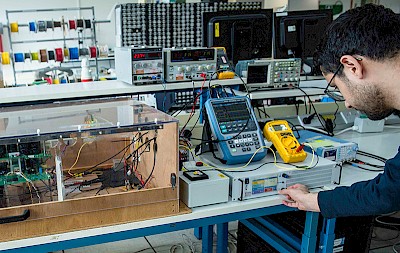
VSD designs comprise many power electronic components, which need to be rigorously tested. To support this, Nidec Drives purchased three LAB-HP DC sources, adding to their existing ETPS power systems.
Project Engineer Rhys Williams explained “The LAB-HP is very versatile and can be used in a wide range of test applications. We primarily use them for testing switched-mode power supplies and pulse testing power semiconductors. This includes IGBTs and MOSFETs for inverter output stages.”
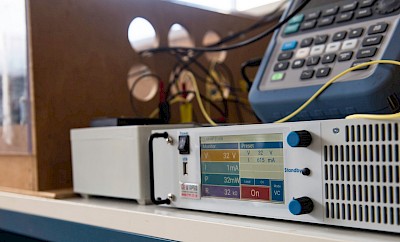 “Ensuring test and operator safety is paramount. The preset feature enables users to preview high voltage output values before applying them to the DUT. Using a 2A current output allows our smaller VSDs to be powered directly and spin relatively small motors. This enables testing of the products with a further level of control over the DC bus voltage.”
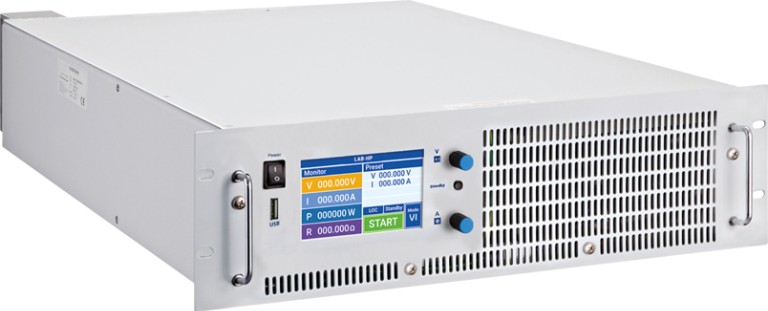
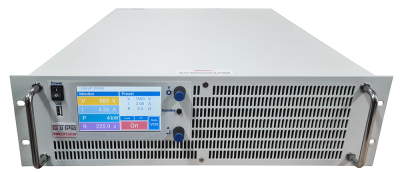 The LAB-HP is a series of programmable DC sources. Each unit is incredibly compact, with up to 21kW of power in just 3U of rackmounting height. The product family features voltages up to 2000V, as well as high current versions. Models are available from 3kW to 63kW.