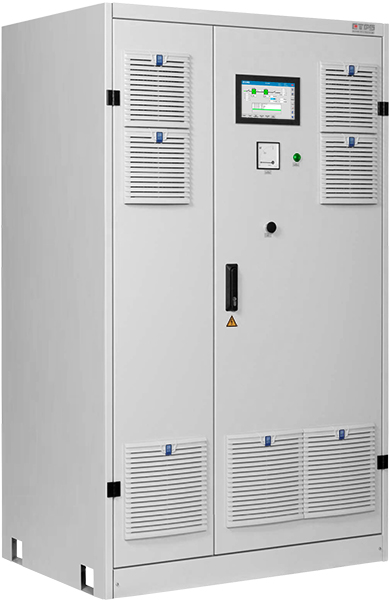
With change on the horizon, ZeroAvia required a highly stable DC power system to ensure their test schedule stays on course.

Aviation currently accounts for 2-3% of total global emissions. Some estimates project this figure to soar to 50% as other industries decarbonise. In response, the UK government aims to halve in-sector emissions by 2050.
To meet this target, significant change is needed across the industry. This includes the adoption of sustainable alternatives to fossil fuels. Emerging technologies will play a critical role, but must demonstrate their safety and reliability. Achieving certification is a lengthy process within a highly regulated sector, so development work must start now.
ZeroAvia is rising to the challenge. Their ZA600 zero-emission hydrogen electric powertrain can be retrofitted into commercial aircraft with up to 20 seats. The platform provides up to 600kW of power, with a flight range of 300 nautical miles.
Gaseous hydrogen is stored in tanks on the aircraft using an advanced management system. Lightweight fuel cells are used to convert the hydrogen into DC electricity. Finally, this is inverted into AC to power electric motors which turn the propellers.
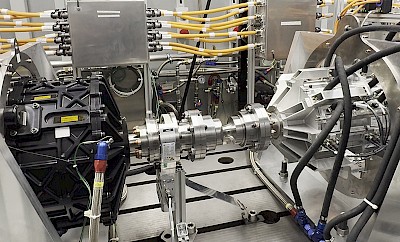
As with all aerospace components, the motors must be tested under stringent conditions. ZeroAvia required a DC power system which was equally as high quality. ETPS provided the team with a LAB-SCUBI bidirectional DC source/sink.
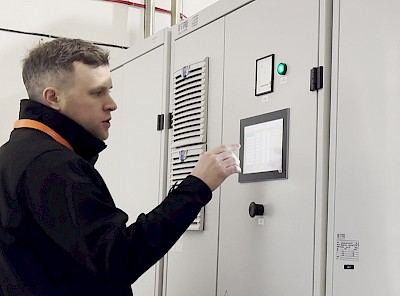
Patrick Burns, Senior Test Engineer, stated “The LAB-SCUBI maintains exceptional voltage and current stability during the start-up of high power components. The fast response times allow it to react to any sudden motor step changes during testing.”
 ZeroAvia’s motors are tested by pairing them back-to-back in a closed circuit with a secondary motor operating as a generator. The LAB-SCUBI feeds DC energy into the circuit to compensate for any losses.
 When asked about working with ETPS, Pablo remarked “It’s been an incredibly positive experience. The technical team at ETPS are very knowledgeable and answered all of our queries swiftly to aid installation. Their product documentation is also excellent.”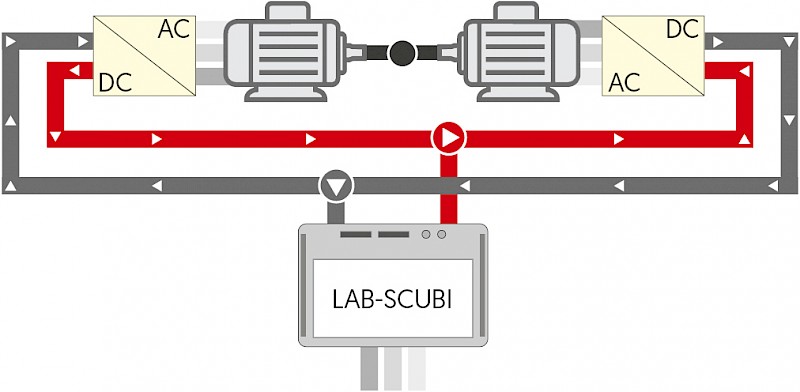
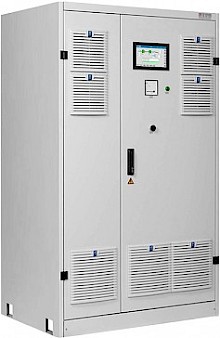 The LAB-SCUBI is a highly dynamic bidirectional DC sink/source. When sinking energy from the unit under test it automatically inverts the DC to AC and synchronises this output to the grid.